From Acqualagna, bringing truffles to your kitchen.For chefs and retailers

A guide to truffles

White, black, summer: learn the differences.

Truffles offer more than one aroma. Understanding the varieties and their seasons helps you decide how to use them in the kitchen.

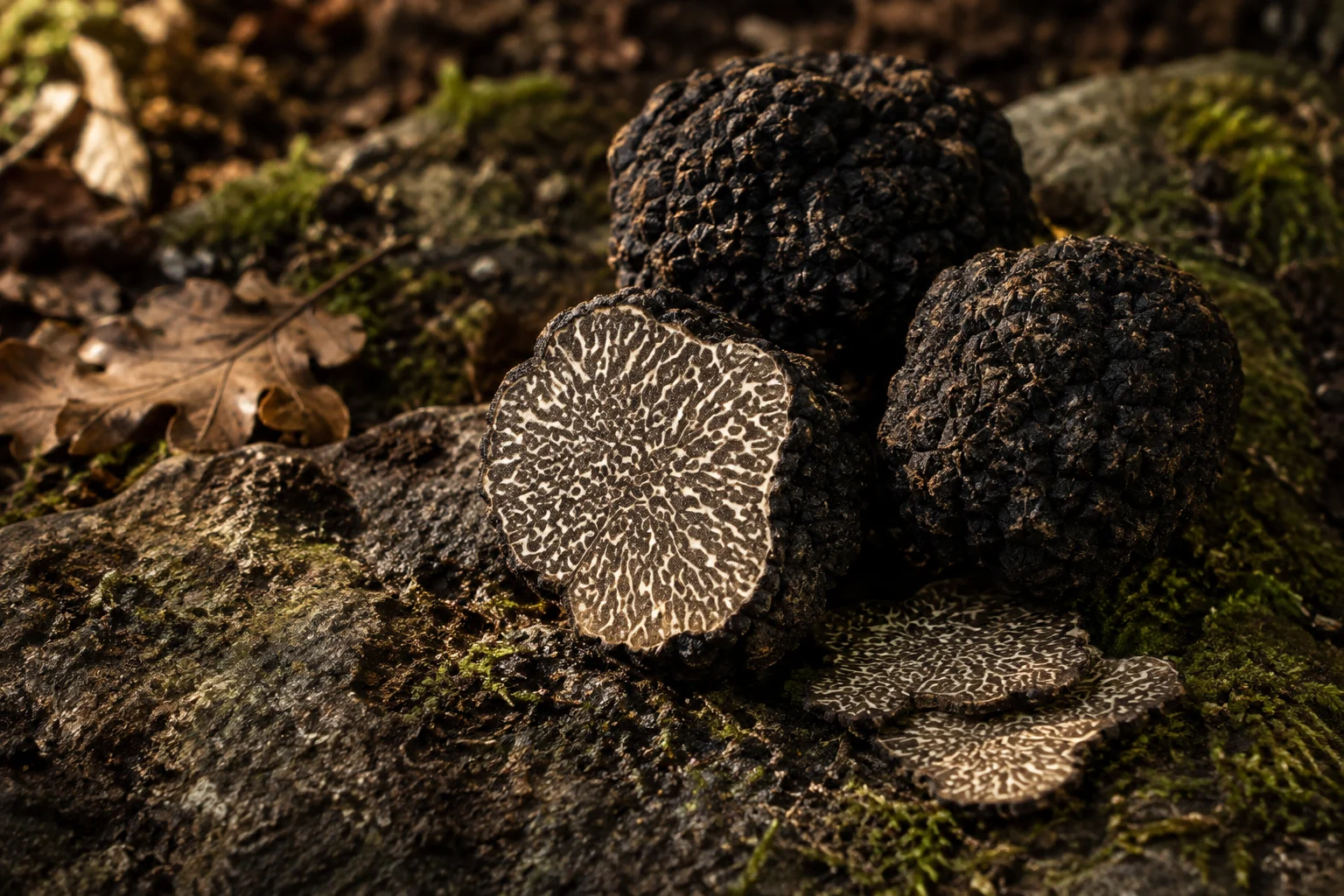
Illustration of whole and cut black truffles with pale internal veins

Look, smell, taste

Every truffle has a story of its own.

Colour, surface and internal veining vary from one species to another. Each aroma has its own character too: recognising it is the first step towards a successful pairing.

Start with the dish: are you looking for a raw finishing touch or an ingredient to blend into a sauce? The choice depends on the variety and the result you want.

Four varieties to discover

Characteristics, seasons and pairings.

Autumn · Early winter

White truffle

Tuber magnatum Pico

A pale surface, shades from ivory to ochre and an intense aroma. Tuber magnatum is deeply connected with Acqualagna’s culinary culture.

In the kitchen
Shave it thinly over a freshly prepared dish. Eggs, buttered tagliolini and delicate risottos give it room to shine. Add it raw just before serving.

Winter

Black winter truffle

Tuber melanosporum Vittad.

Dark on the outside, with flesh crossed by fine, pale veins. Tuber melanosporum lends itself to balanced pairings and rich, comforting dishes.

In the kitchen
It can also be used in gently cooked dishes. Try it with fresh pasta, potatoes or fillings, working it into the recipe without masking its character.

Summer

Summer truffle, or scorzone

Tuber aestivum Vittad.

Its dark, pronounced outer rind gives it the Italian name scorzone. Tuber aestivum is a variety to discover when exploring truffles in everyday recipes.

In the kitchen
Chop it for a crostino or a pasta sauce. Use other aromatics sparingly and taste as you cook to find the right balance.

Late winter · Spring

Bianchetto, or marzuolo

Tuber borchii Vittad.

Tuber borchii is a distinct species from the prized white truffle. It has its own aromatic identity; the name marzuolo refers to the period between late winter and spring.

In the kitchen
Try it in a creamy pasta sauce or over a smooth soup. Start with small amounts and adjust to suit the dish and your taste.

Seasons are indicative: availability and harvesting depend on the region, climate and local harvest calendars. Learn more about the species: Centro Nazionale Studi Tartufo.

From the guide to your kitchen

Find your next inspiration.

Explore CM Tartufi specialities. For your home kitchen or a professional product range, start with our collection.